For communities
Power that stays on. Bills that make sense.
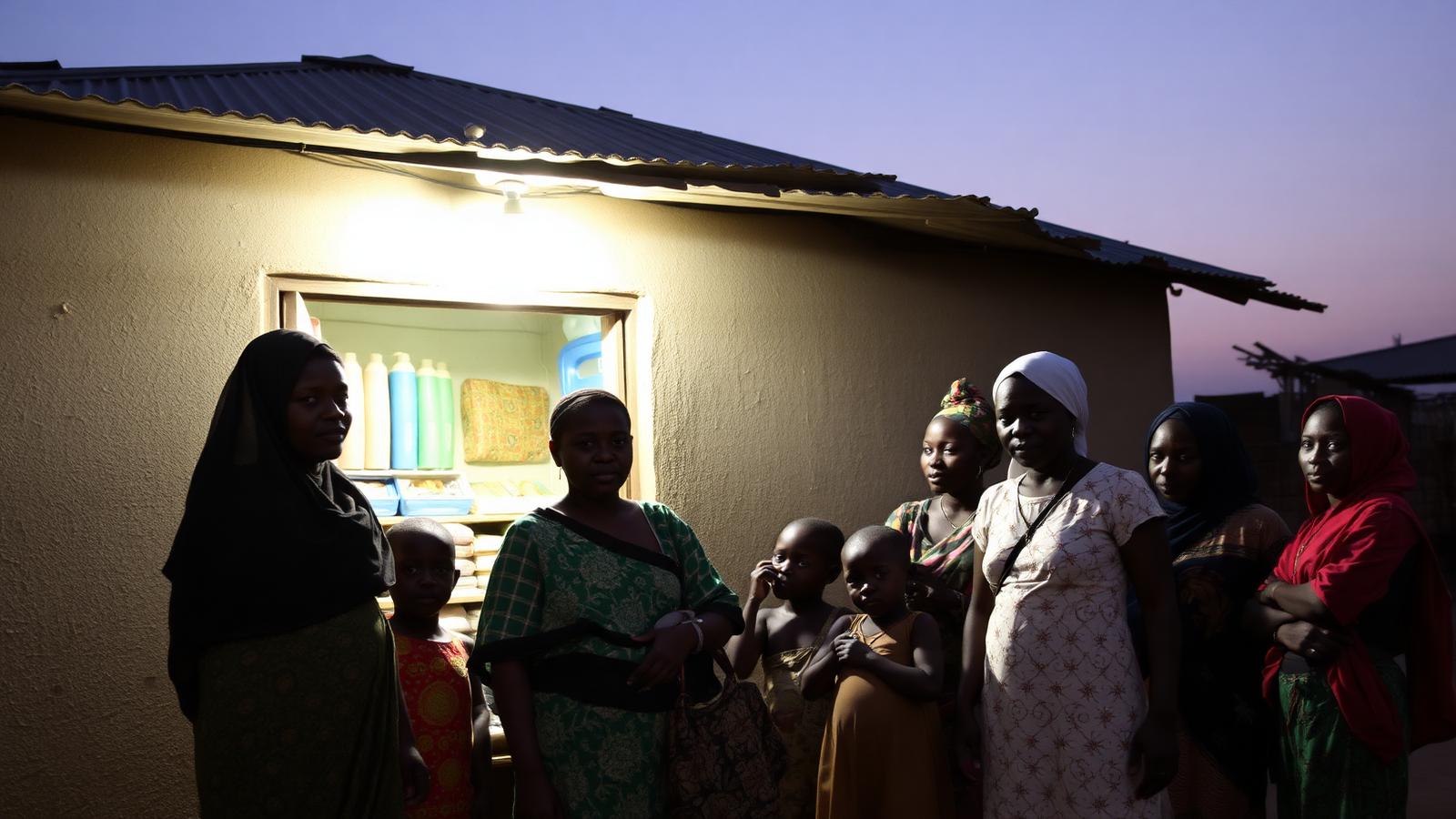
If your community has unreliable electricity and a few hundred homes within walking distance of each other, you might be a good fit for a Common Watt mini-grid.
How to know if your community is a fit.
At least 150 households within a 2km radius.
A few productive-use customers — a mill, a cold store, a welder, a school.
A community leader willing to host the conversation.
A site for solar panels — half an acre of accessible land.
What it costs.
Tariffs are filed with the State Electricity Regulatory Commission and reviewed annually. There is no upfront cost to subscribe.
How to start a conversation.
Frequently asked.
What if the national grid arrives?+
We have exit-compensation rights under NERC's Mini-Grid Regulations 2023. Customers don't lose service or money.
What if I can't pay one month?+
Service pauses until you top up. There's no debt and no penalty. We do not disconnect you for a single missed day.
Who owns the equipment?+
Common Watt owns and maintains the panels, batteries, and meters. You pay only for the electricity you use.
Can I get solar at my single home?+
Not yet. Mini-grids only make sense when several homes are close together. Look at solar home system providers like Bboxx, M-KOPA, or Sun King for single-house systems.
Is the power 24/7?+
Yes. We contractually commit to 99%+ uptime. Faults are typically fixed within hours.
What does this cost compared to a generator?+
About half. A diesel generator runs at USD 0.40–0.55 per kWh; we run at USD 0.18–0.28.
How does payment work?+
Smart prepaid meters and mobile money. You top up like airtime, and the meter shows your balance.
How long is the agreement?+
20 years for the community concession. For individual customers, there's no contract — you can stop topping up any time.