How it works
Electricity as a service, priced like a phone plan.
Most Africans without grid access face a false choice — buy a diesel generator, or buy a solar home system that won't power a fridge or a welding machine. Common Watt offers a third option.
The model in plain language.
Common Watt builds the mini-grid.
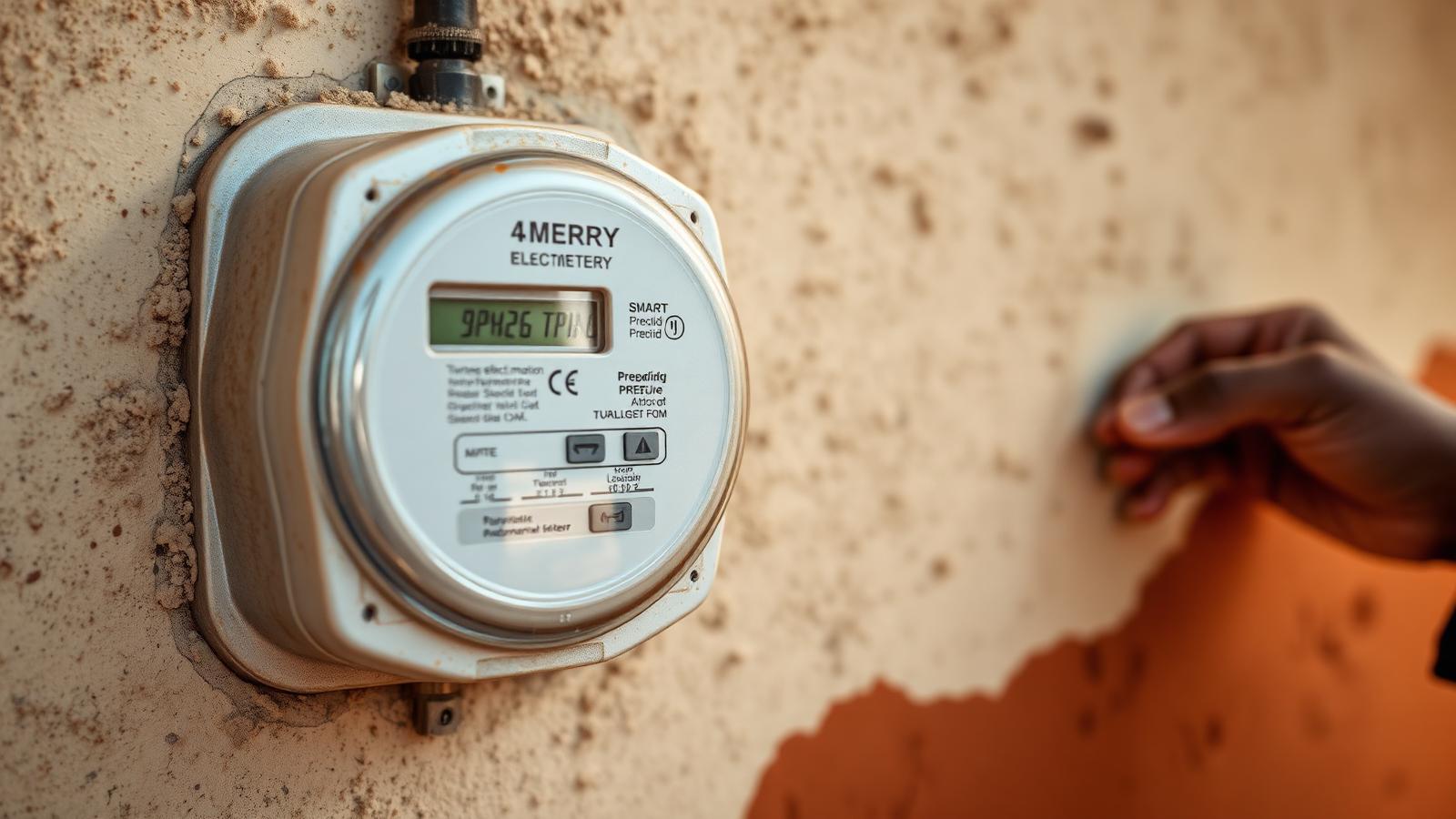
Solar panels, battery storage, distribution lines, and smart prepaid meters at each home or business. We pay the upfront cost.
Customers subscribe to a tier.
A household plan starts at ₦2,500 a month for 30–50 kWh. A productive-use plan (welder, miller, cold storage) can run ₦15,000–₦60,000. Top up via mobile money.
We run it for 20 years.
Local agents handle faults. The meter charges only when the lights are on. If we don't deliver, you don't pay.
What it costs, compared.
| Source | Typical cost per kWh | Reliability |
|---|---|---|
| Petrol generator | USD 0.55 | Loud, costly, fume-intensive |
| Diesel generator | USD 0.42 | Better for businesses, still costly |
| National grid (where present) | USD 0.06 | 8–14 hours of outage per day |
| Common Watt mini-grid | USD 0.21 | 99%+ contracted uptime |
What's bundled into the subscription.
- ✓Hardware
- ✓Installation
- ✓Maintenance
- ✓Replacement parts
- ✓Fault response
- ✓Smart prepaid metering
- ✓Customer support in English / Yoruba / Hausa / Igbo
If the national grid arrives.
NERC's Mini-Grid Regulations 2023 give Common Watt clear exit-compensation rights if a distribution company extends the national grid into a community we already serve. The DisCo must compensate the mini-grid operator at a transparent formula — which means customers don't lose service or money, and investors don't lose their stake. This is the single biggest investability change in the Nigerian off-grid sector in the past decade.